Yes, you can absolutely visit the Costa Vicentina without a car. It just takes a little planning. The single thing that makes it all work is a private, door to door transfer to get you here, paired with a well located base like ours in Odeceixe. From our doors, the village, the beaches and the famous Trilho dos Pescadores are all within walking or easy cycling distance. Once you arrive, you settle in, unpack your bags and let the pace of this rural coast take over. No rental counter, no parking, no stress. In this guide we share exactly how to plan a relaxed, car-free stay on Portugal's wildest stretch of coastline.
We run this business ourselves, we drive the transfers, and we host guests in our own units, so everything below comes from doing it day after day rather than from a brochure. We will tell you what genuinely works, where the buses let you down, how far the bikes will comfortably take you, and how we quietly smooth over the parts that used to make car-free travel feel like hard work. By the end you should be able to picture your whole trip, from the moment you step off the plane to the walk home from the beach as the light softens.
Is it really possible to visit the Costa Vicentina without a car?
Let us be honest with you, because that is more useful than a sales pitch. The Costa Vicentina is genuinely rural. Public buses exist, but they are infrequent and slow, and they do not reach many of the trailheads and beaches you will want to see. So no, you cannot rely on turning up and hopping on a bus every hour. That said, a car-free trip here is very doable, and it is growing more popular every season with eco-minded and car-free travellers who would rather not drive on holiday at all.
The trick is to think differently from a typical road trip. Instead of driving everywhere, you choose a base that already puts the best of the region within reach on foot or by bike. Then you use a private transfer to arrive and a local taxi for the occasional longer hop. Do that, and you trade the stress of narrow lanes and full car parks for slow mornings, sea air and the sound of your own footsteps. Many of our guests tell us the car-free version turned out to be their favourite trip in years.
It also helps to be realistic about what you actually want from a week here. Most people come for the beaches, the coastal walking, the seafood and the quiet, not for ticking off a long list of far-flung sights. When your days are built around one beautiful beach, one section of trail and a lazy lunch, you simply do not need a car sitting outside. The car-free approach fits the place perfectly, because this coast rewards slowing down rather than rushing between car parks.
Getting here without a car
Getting to Odeceixe is the part that worries most people, and it is the easiest part to solve. You have two sensible airports, Faro and Lisbon, and from either one the simplest, most comfortable option is a private transfer straight to your door. Here is how each route works, and why we think it is money well spent.
From Faro
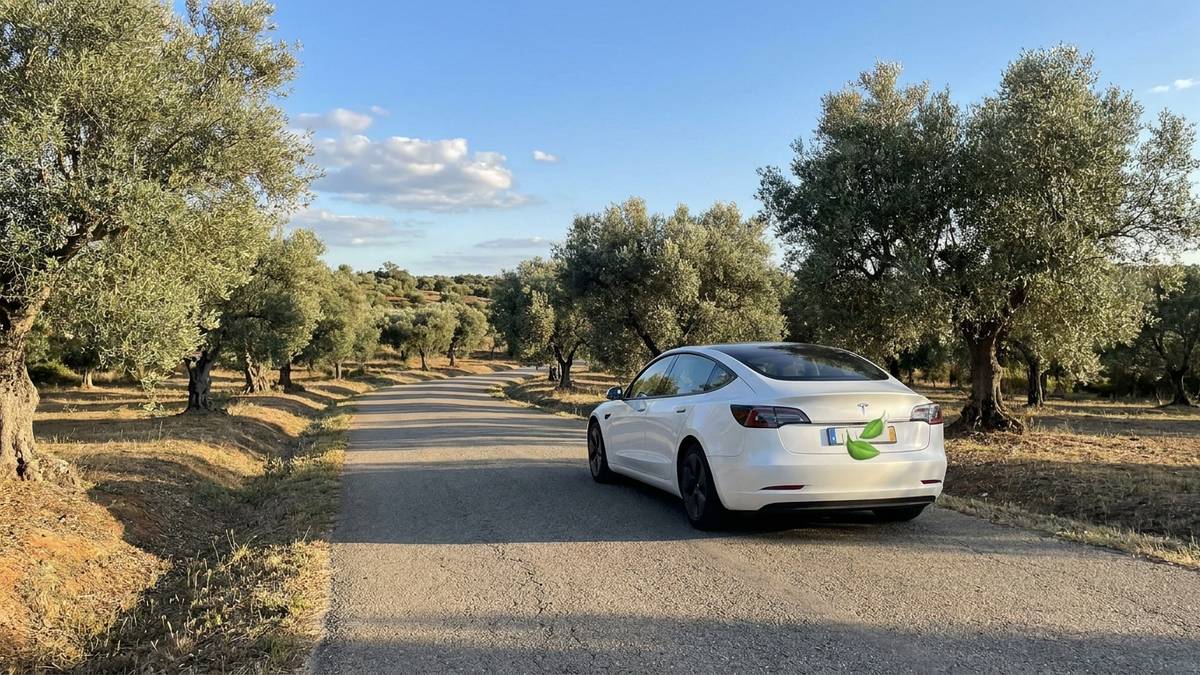
Faro is the closest airport and the one we recommend. Our private Tesla transfer costs 150 EUR for the journey, and it takes around 1h30 to cover the roughly 110 km to Odeceixe. It is door to door, so we collect you right at the terminal and drop you at your accommodation with your bags. We use real-time flight tracking, which means that if your flight is early or delayed we already know, and we adjust. No waiting, no stress, no hunting for a bus. For a full breakdown of this route, see our Faro to Odeceixe transfer guide.
The price is for the car, not per person, so for a couple it is very reasonable and for a family or a small group it works out excellent value. Child seats, a bit of extra luggage, surfboards or bikes of your own are all fine, just tell us in advance so we bring the right vehicle and set-up. Because the car is electric it is quiet and smooth, which matters more than you would think after a long flight. Most guests doze, watch the cork oaks roll by, or start planning their first beach day out loud before we even reach the coast.
From Lisbon
If you are flying into Lisbon, we cover that too. Our private transfer from Lisbon costs 250 EUR and takes about 3 hours. It is a lovely drive south, and because it is direct you can relax, watch the landscape change from city to cork oak country, and arrive rested rather than frazzled. As with Faro, we track your flight, meet you at arrivals and carry you all the way to the coast. Lisbon suits guests who want a city night or two first, or who found a better long-haul connection into the capital.
Compare that with doing the same trip by public transport and the appeal is obvious. From Lisbon you would face a long-distance coach, a change, and a final leg into the countryside, with waits in between and your luggage in tow the whole way. Our direct run turns a fragmented half-day into a single comfortable journey. And if you travel with us regularly, a loyalty discount kicks in from your third service, which returning walkers and second-home visitors genuinely appreciate over a season.
The public transport reality
We want to be straight with you about buses. It is possible to reach this area by public transport, usually routing through Lagos and then Aljezur, but the connections are infrequent and the total journey is slow. From Faro you would typically take a train or coach along the Algarve to Lagos, change to a regional bus toward Aljezur, and then find onward transport for the last stretch to Odeceixe. Each link has its own timetable, and they do not always line up neatly.
Timetables thin out at weekends and in the low season, and some services drop to just one or two a day. With luggage, a couple of transfers between buses and a walk at the end, a trip that takes 1h30 by transfer can eat most of a day. If a single connection slips, you can be stranded for hours in a town that was never your destination. If your time and comfort matter, and especially if you are arriving jet-lagged after a flight, a private transfer is genuinely worth it. It is often the difference between starting your holiday tired and starting it relaxed and ready for the beach.
Getting around once you are here
This is where a good base earns its keep. Because we are so close to the village, the trail and the beaches, most of your days need no car at all. The distances here are human-scale, the kind you can cover on foot or by bike without it ever feeling like an expedition. Here is how our guests actually move around during a typical stay.
On foot
The village of Odeceixe sits about 3 km away, an easy stroll or a very short ride for a coffee, a meal or a few groceries. The walk in takes roughly forty minutes at an unhurried pace along quiet country roads, and plenty of guests do it in the cool of the morning or the golden hour before dinner. In the village you will find cafes, restaurants, a bakery, small shops and the gentle everyday life of a Portuguese hill town that has kept its character rather than surrendering it to tourism.
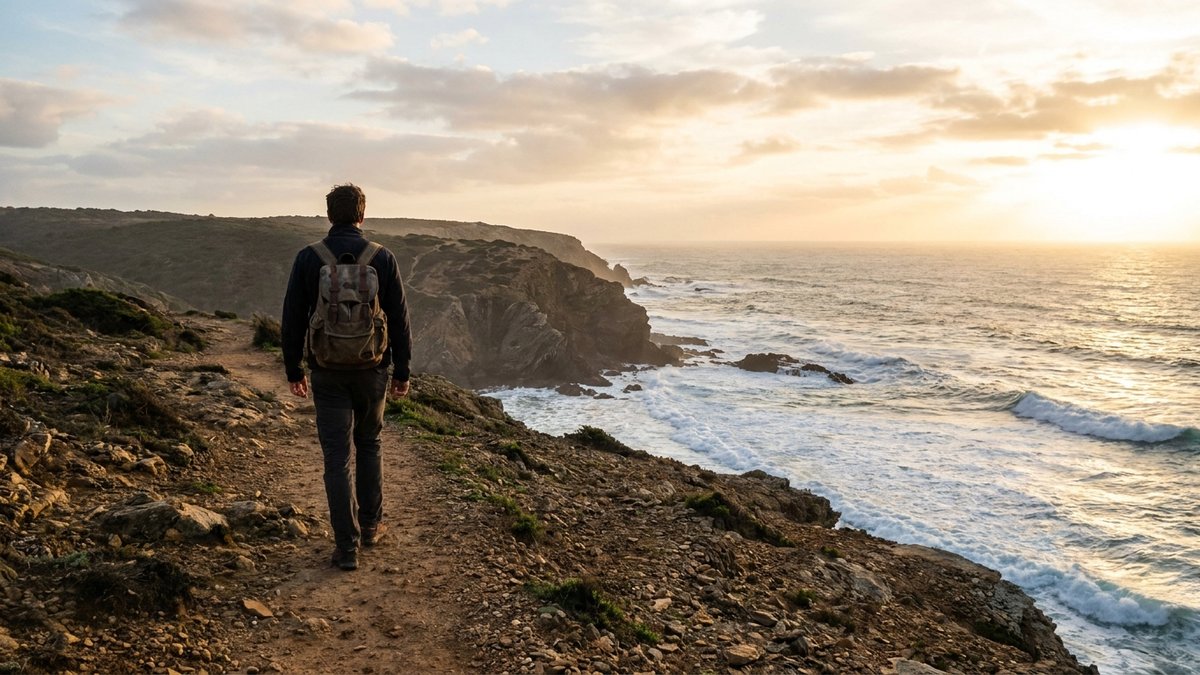
Even better, the Trilho dos Pescadores, the coastal section of the Rota Vicentina, passes just 2 km from us. That means you can walk straight from your accommodation onto one of the most beautiful footpaths in Portugal, follow the cliffs above the Atlantic, and be back for lunch. The trail is waymarked and hugs the coast, so you are rarely far from a sweeping ocean view. We are happy to point you to the nearest access point and the best direction to walk on the day, depending on the wind and how far you fancy going.
By bike
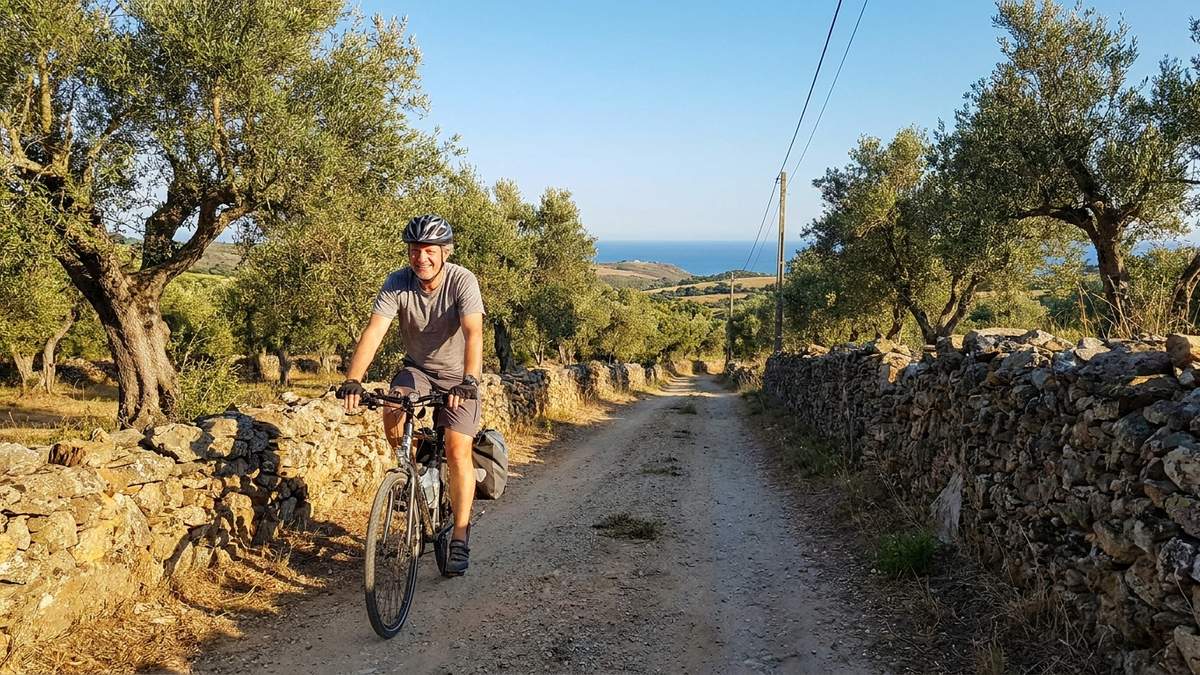
We provide bikes for our guests, and they are the secret to a truly car-free stay. The lanes around Odeceixe are quiet and rural, perfect for gentle cycling, and they carry you down toward Odeceixe beach and along the valley. A bike turns a beach day into something spontaneous. You can ride out in the morning, spend the day on the sand, and roll home whenever you please, with no parking to find and no shuttle to catch.
The ride to Odeceixe beach is around 5 km, mostly following the river valley on lightly trafficked roads, and it takes twenty to thirty minutes at a relaxed pace. The outbound leg is gentle, and the main thing to plan for is the afternoon wind on the way back, which we cover below. Popping into the village at 3 km is even easier, a quick spin for bread, wine or an ice cream. The bikes are yours to use through your stay, so treat them as your default set of wheels rather than a novelty for one afternoon.
Local taxis
For the occasional longer trip, a local taxi is your friend. It is perfect for a dinner in a neighbouring village, a supermarket run in Aljezur, about 12 km away, or a one-way ride to a distant trailhead so you can walk back along the coast. Taxis here are not the hail-on-the-street kind, so the golden rule is to book ahead. Give the driver a little notice, ideally the day before, and everything runs smoothly.
Fares are modest for short local hops, though it is always worth confirming the price when you book so there are no surprises. Because drivers are few and cover a wide rural area, they can be busy on summer evenings and at weekends, which is another reason to arrange rides in advance rather than at the last minute. We keep trusted local numbers on hand and are glad to share them, or to make the call for you if there is any language barrier. Used sensibly, a taxi or two through a week costs a fraction of a rental car.
Local buses
Local buses do run, and they can be useful for the budget-minded and the flexible. The practical routes mainly connect Aljezur, Odeceixe and Lagos, which covers the everyday needs of the area. Service is limited, often just a handful of departures a day, and it changes between the school term, weekends and the summer season, so a timetable that worked last year may not match this one.
Always check the current schedule the day before, and crucially plan your return so you are not left waiting hours for the last bus, or worse, missing it. For a spontaneous beach afternoon we would reach for the bikes first, since they free you from the clock entirely. But for a planned day trip to a larger town, a spot of shopping in Aljezur or a change of scene, the bus can do the job nicely and cheaply. Treat it as a useful extra rather than your main way of getting about.
Beaches you can reach without a car
The good news is that the star of the show is within easy reach. Praia de Odeceixe sits about 5 km from us, and you can get there by bike or by a short taxi ride. It is a stunning beach where the river meets the ocean, with a calm river side that is lovely for families and a wilder Atlantic side for surfers and walkers. On the bike it is a gentle outing, and the ride itself, down through the green valley with the sea opening up ahead, is part of the pleasure.
You can also reach it on foot if you enjoy walking, whether along the road route or by joining the coastal trail for a more scenic approach, then flag a taxi for the return if your legs have had enough. That flexibility is the whole point of a car-free set-up: you mix and match bike, feet and the occasional taxi to suit your mood and the weather. Nobody is stuck being the driver, and nobody is circling a full car park in the midday heat looking for the last space.
One local rhythm is worth planning around, and that is the Nortada, the reliable northerly wind that tends to pick up in the afternoon. Mornings are often calmer, sunnier and better for lazing on the sand, while the wind can freshen things considerably after lunch and kick up the sand on exposed stretches. We suggest heading out earlier and, if you are cycling, remembering that a headwind can make the return leg noticeably harder. Pack a light windproof layer even on hot days. If you want to explore further afield, beaches like Amoreira, Monte Clérigo and Arrifana near Aljezur, or Carvalhal and Zambujeira do Mar to the north, are all within taxi reach for a special day out.
Why a car-free trip here is a joy
Once you have tried it, you may never want to drive on this coast again. The narrow village lanes and small beach car parks fill up fast in summer, and circling for a space is nobody's idea of a holiday. Some of the smaller beaches have only a handful of spaces and a bumpy track in, so drivers can arrive tense and leave frustrated. Without a car, that whole layer of low-level stress simply disappears. You are not the designated driver, so everyone can enjoy a long lunch with a glass of local wine.
There is an environmental payoff too. Our transfers run in an all-electric Tesla, so your journey to and from the coast is clean and quiet, and your days here move by bike and on foot. This is a protected natural park, and travelling gently through it feels right. Going car-free, you naturally slow down. You notice the wildflowers on the trail, the storks and kestrels over the river, the smell of the sea before you see it, the little details that a windscreen tends to blur past at speed.
The numbers add up in your favour as well. A week's car rental in high season, plus fuel, plus motorway tolls on the way down, plus paid parking, quickly climbs into real money, and that is before the stress of Portuguese country roads and the worry of a scratch on the return. Swap all of that for one transfer in, the guest bikes for free, and a couple of taxis, and a car-free trip is often kinder to your budget as well as to the coastline. You spend on experiences and good meals instead of on a car that sits idle outside most of the day.
A sample car-free day
To make it concrete, here is how an easy day might unfold. You wake without an alarm, make coffee, and take the bikes into Odeceixe at around 3 km for fresh bread and a pastry while the village is still quiet. Back at the house you pack a small daypack with water, sunscreen and a windproof layer, then ride the gentle valley road down to Praia de Odeceixe. You arrive before the Nortada, so the morning is calm and warm for swimming and lazing on the sand.
After lunch at a beach cafe, you have options. If the wind is up and you would rather not pedal into it, you call the taxi number we gave you and ride home the easy way, with the bikes collected later or walked back another day. Or you leave the bikes and join a short stretch of the Trilho dos Pescadores on foot, cliffs on one side and the Atlantic below, before looping back. Home by late afternoon, you shower, pour a glass of wine on the terrace, and stroll into the village for dinner as the light softens. Not a car key in sight, and not a moment of it stressful.
Practical tips for a car-free stay
A little forethought turns a car-free trip from workable into wonderful. Here are the things we would tell a friend planning their first visit, gathered from hosting a lot of them.
First, book your transfer as soon as your flights are firm. That lets us lock in your pickup and plan the day around your arrival, and it means one less thing to sort out later. Second, ask us to help with food. We are happy to stock the fridge with a few essentials before you arrive, so there is milk, bread, coffee and a bottle of something waiting, or to stop at a supermarket on the way from the airport so you can settle in without a shopping trip on day one. Third, pack light. You will thank yourself on the bikes and on the trail, and lighter bags make every taxi and bus far easier.
A few more practical notes on staying connected and organised. Sort out a local SIM or an eSIM before or on arrival so you can check timetables, message taxis, use maps and stay reachable without hunting for wifi. Download an offline map of the area too, as signal can dip on remote parts of the coast. Keep the taxi numbers and our contact saved and easy to find, and screenshot the current bus timetable rather than relying on a page loading at the roadside.
Plan your beach days around the bikes and the calmer mornings, and always factor the Nortada into your return leg. Carry a little cash for smaller cafes and the bus, alongside your card. Arrange any taxis in advance, ideally the day before, rather than hoping to find one on the spot, especially for early starts and evening dinners. And do lean on us. We know this coast intimately, and we are glad to plan trailhead drop-offs so you can walk a beautiful one-way section of the Trilho dos Pescadores in the best direction for the day, then simply stroll or ride home, or hop a taxi back, at the end. That single bit of logistics turns a good walk into a great one.
Finally, choose your base with care, because it does most of the work. We offer three units to suit different groups: Casa T3 sleeps up to 6, the Loft sleeps 4, and Casa T1 is a cosy space for 2. Being this close to the village, the trail and the beach is exactly what makes the car-free maths work, so location really is everything. You can see all of our three units and pick the right fit. If a walking holiday is your main aim, our guide on where to stay on the Fishermen's Trail goes deeper, and you can read the full details of our private Tesla transfer whenever you are ready to plan the journey. Between the transfer, the bikes and a well placed home, the Costa Vicentina without a car is not a compromise at all. For many of our guests, it is the best way to see it.