Why is surfing Costa Vicentina so special? Because this stretch of southwest Portugal catches consistent Atlantic swell all year round, offers a remarkable variety of waves within a short drive, and remains genuinely uncrowded compared with almost any other surf coast in Europe. There is no boardwalk, no high-rise, no queue of a hundred surfers at the peak. Instead you get wild beach breaks framed by dark cliffs, a famous sheltered pointbreak at Arrifana, gentle rivermouth waves perfect for beginners, and the whole thing wrapped inside the protected Parque Natural do Sudoeste Alentejano e Costa Vicentina.
We host guests here year round, in the olive groves just above Odeceixe, and a large share of them come for the waves. Some are complete beginners booking their first lesson, others are travelling surfers chasing autumn swell with three boards in the bag. This guide gathers everything we tell them: the best spots near Odeceixe and Aljezur and what each wave is like, the best season to come, how schools and rentals work, what level you need for each break, local etiquette, forecasting and tides, and which wetsuit to pack. By the end you should know exactly where to paddle out and when.
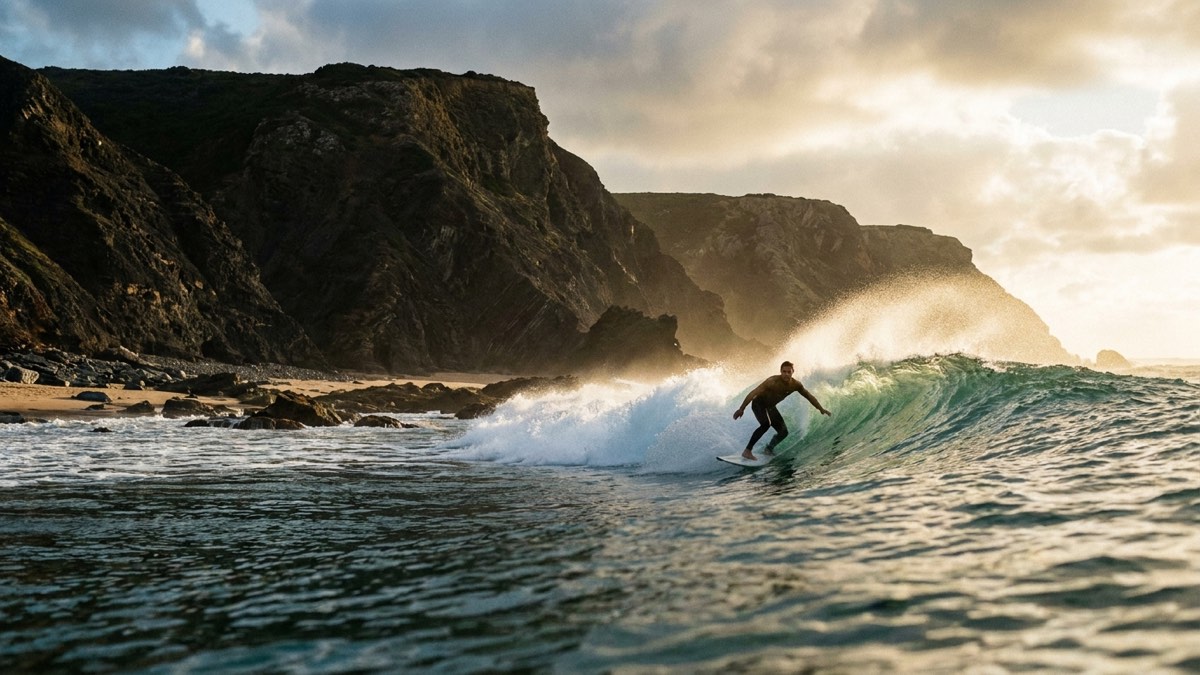
The best surf spots near Odeceixe and Aljezur
The beauty of basing yourself around Odeceixe and Aljezur is that five very different waves sit within about twenty five minutes of each other. Swell direction, wind and tide rarely shut them all down at once, so on almost any day of the year at least one spot is working. Here is each break in detail, with the honest character of its wave and the distance from our door.
Praia de Odeceixe: the gentle rivermouth
Praia de Odeceixe is our home beach, just 5 km and about 5 minutes from us, and it is one of the friendliest waves on the whole coast. The Seixe river meets the ocean here, and the sandbanks it builds produce soft, sloping waves that peel gently rather than pitching and dumping. On small to medium swells it is a dream for beginners, longboarders and anyone who wants long, mellow rides instead of a beating. The river lagoon behind the beach adds a calm, warm pool where children paddle while the surfers play outside.
The beach faces slightly northwest inside a horseshoe of cliffs, which gives it a little protection and a beautiful amphitheatre setting. It works best from low to mid tide when the banks organise themselves, and mornings are usually cleanest before the wind rises. When a bigger swell hits, the paddle-out gets serious and the peaks shift, so beginners should stick to the whitewater or wait for a smaller day. Most of the year, though, this is exactly the kind of forgiving, sandy-bottomed wave people picture when they decide to learn to surf on holiday.
Praia da Amoreira: sandbanks at the Aljezur rivermouth
Amoreira, 23 km and roughly 22 minutes south of us, is where the Aljezur river reaches the sea, and it works on the same happy logic as Odeceixe: rivermouth sandbanks shaping friendly, well-organised peaks. The wave suits beginners through intermediates, with a bit more push and shape than Odeceixe on the right banks. The setting is spectacular, a wide bowl of dunes and sculpted cliffs with a huge stretch of sand at low tide, so even on a busy summer day there is space for everyone.
Like all rivermouth spots, the banks move around after winter storms, so the best peak might sit in a slightly different place from one season to the next. The estuary itself gives the same bonus as Odeceixe: sheltered, shallow water for the non-surfers in your group. Amoreira picks up plenty of swell, so on bigger days intermediates find punchy walls while beginners retreat to the inside. It is one of our favourite recommendations for mixed-level groups who want one beach that keeps everybody happy.
Monte Clérigo: the accessible family beach break
Monte Clérigo sits 22 km and about 21 minutes away, a classic open beach break in front of a tiny cluster of whitewashed holiday houses. It is one of the most accessible waves in the area: you park almost on the sand, the peaks spread across the whole beach, and there is nearly always a corner working at some size. On a typical day you will see surf lessons in the whitewater, locals trading peaks out the back, and families picnicking between the rock pools at the ends of the beach.
The wave itself is a straightforward beach break with several shifting peaks, faster and hollower on the right banks at lower tides, fatter and easier as the tide fills in. It handles small to medium swell beautifully and gets challenging when a big autumn swell arrives. Because it is so easy to reach and read, Monte Clérigo is the spot we most often suggest for improvers who have done a few lessons and want to practise on green waves without the pressure of a heavier lineup.
Arrifana: the famous sheltered bay
Arrifana is the postcard of surfing Costa Vicentina, 23 km and about 22 minutes from us. A dramatic crescent bay tucked under towering dark cliffs, it is the most sheltered spot in the region, which makes it the place everyone heads when the rest of the coast is blown out or too big. The main beach break peaks are friendly at small sizes, and the surf-village atmosphere around the clifftop hamlet, all board racks, salty hair and sunset watchers, is half the reason people fall in love with it.
The jewel, though, is the pointbreak at the north end. When a solid swell wraps into the bay, a long, fast right-hander reels along the boulders beneath the fishing harbour. It is a genuinely world-class wave on its day and strictly for experienced surfers: rocky, competitive and unforgiving of hesitation. On big winter days the point wakes up while the middle of the beach stays surfable for strong intermediates. If you only visit one surf spot on this coast for the spectacle alone, make it Arrifana.
Carrapateira: Bordeira and Amado
Half an hour further south around the village of Carrapateira lie two of the most consistent beach breaks in the Algarve: Praia da Bordeira and Praia do Amado. Bordeira is a vast, wild expanse of sand and dunes with powerful peaks scattered along it, swallowing swell and crowds alike. Amado, just over the headland, is one of the most famous surf beaches in Portugal, a reliable, well-shaped beach break that hosts national and international competitions and works through most tides and sizes.
These two are the region's swell magnets: when everywhere else is flat in midsummer, Amado usually still has a rideable wave, which is exactly why so many surf schools operate there. The flip side is power. On a proper swell both beaches turn heavy, with strong currents that demand respect and solid fitness. For a day trip from Odeceixe they are an easy, scenic drive, and combining a morning session at Amado with lunch in sleepy Carrapateira is one of the great simple pleasures of a surf trip here.
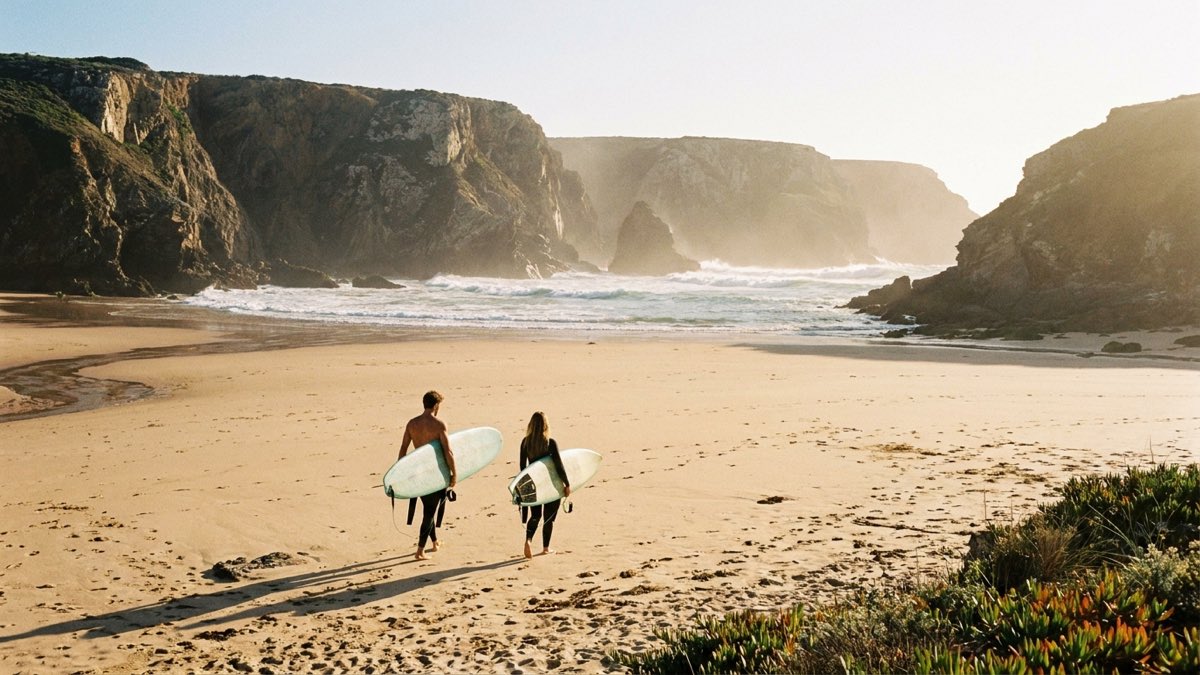
The best season for surfing Costa Vicentina
The honest answer is that there are waves twelve months a year, and the right season depends entirely on your level. For wave quality and consistency, autumn through spring is the prize. From roughly October to April, long-period Atlantic swells march in one after another, the summer wind machine switches off, and the sandbanks see everything from playful chest-high days to serious size. Autumn in particular, October and November, blends warm-ish water, golden light, empty lineups and reliable swell, and many travelling surfers consider it the best window of all.
Summer flips the equation. From June to August the swell is smaller and the Nortada, the steady north wind, blows most afternoons. That sounds like bad news, but it is precisely what makes summer perfect for learning: waist-to-chest waves, warm days, and mornings that are often glassy before the wind arrives. The Nortada also grooms certain angles of coast into clean, wind-shaped peaks, and sheltered corners like Arrifana stay tidy when open beaches turn choppy. Winter, meanwhile, belongs to experienced surfers: powerful, sometimes huge swells, uncrowded peaks, and the pointbreak at Arrifana doing its best work.
Whatever the season, the golden rule here is surf early. Dawn and mid-morning sessions get the lightest wind and the emptiest peaks, leaving afternoons for the beach, the trails or a long lunch. If you are weighing up months for the whole trip, not just the waves, our detailed guide to the best time to visit Costa Vicentina walks through weather, crowds and prices month by month.
Surf schools, lessons and board rental
You do not need to bring anything or know anyone to surf here: the area around Odeceixe, Aljezur, Arrifana and Carrapateira has a healthy number of surf schools and rental outfits, and the standard is generally excellent. Instructors are certified, groups are small, and lessons run all year round, though the widest choice of times is from spring to autumn. A typical beginner lesson lasts around two hours, includes board and wetsuit, and starts on whichever beach has the friendliest conditions that day, which is exactly how it should be.
Renting is just as easy. Soft-top beginner boards, mid-lengths, shortboards and wetsuits are all available in the surf towns, by the half day, day or week. If you already surf but do not want to fly with a board bag, you can be equipped within an hour of arriving. A few practical tips from our guests' experience:
- Book lessons a few days ahead in July and August, when schools fill up fastest.
- Tell the school your honest level: they choose the beach and board accordingly, and you will progress faster.
- Multi-day packages, three to five lessons, are where beginners make the real breakthrough from whitewater to green waves.
- If you rent independently as a beginner, stay at lifeguarded beaches in summer and ask the rental staff where is safe that day.
What level do you need? Spot-by-spot recap
Conditions change daily, and any spot can be gentle or gnarly depending on the swell, but this is the fair summary we give guests when they ask where to paddle out:
- Praia de Odeceixe: beginners and longboarders first, thanks to the soft rivermouth banks; fun for everyone on small clean days. 5 km from us.
- Praia da Amoreira: beginners to intermediates; more push than Odeceixe on good banks, with a sheltered estuary beside it. 23 km.
- Monte Clérigo: beginners in the whitewater, improvers and intermediates out the back; the easiest all-round spot to read. 22 km.
- Arrifana: beach peaks for beginners and intermediates on small days; the pointbreak is for experienced surfers only. 23 km.
- Bordeira and Amado: consistent school-friendly peaks at small sizes, but powerful and current-prone with swell; intermediates and up should love it. About 30 to 35 minutes' drive.
One safety note we always add: this is an open Atlantic coast with real currents, not a resort wave pool. Swim and surf at lifeguarded beaches in season, respect the flags, and if you are ever unsure, take a lesson or ask the locals. Nobody here minds a polite question; everybody minds a rescue.
Local etiquette: how to earn smiles in the lineup
Lineups here are small and friendly, and they stay that way because people follow the unwritten rules. They are the same rules as everywhere, applied with Alentejo calm. The surfer closest to the peak, or already riding, has priority: dropping in on someone is the one sure way to sour a session. Wait your turn, take your wave when it comes, and do not paddle straight to the top of the peak the moment you arrive. A nod and a bom dia go a remarkably long way.
Respect the locals who surf these banks all year. That does not mean being timid; it means observing for ten minutes before paddling out, seeing where the experienced surfers sit, and slotting in rather than barging in. If a peak looks crowded, and here crowded means fifteen people, remember that this coast is full of secondary peaks and whole beaches with nobody on them. Walking two hundred metres down the sand at Bordeira or Monte Clérigo often buys you a peak of your own, which is a luxury most surf destinations simply cannot offer anymore.
Finally, remember you are surfing inside a protected natural park. Take your litter home, use the marked paths down the cliffs instead of cutting new ones, and give the fishermen casting from the rocks a wide berth. The wildness is the whole point of this place; every surfer who passes through shares the job of keeping it that way.
Forecasts, swell and tides
Costa Vicentina rewards surfers who check the forecast and punishes those who do not, simply because conditions swing so much with wind and tide. Before each session, look at three things on any forecast tool of the Windguru type or a swell chart: swell size and period, wind direction and strength, and the tide. As a rule of thumb, longer-period swells bring more power than the raw height suggests, mornings beat afternoons for wind, and each spot has tide windows when its banks switch on.
Tide matters more here than many visitors expect. The tidal range can exceed three metres, and a bank that peels perfectly at low tide can vanish entirely two hours later, especially at the rivermouths of Odeceixe and Amoreira. Rather than memorising rules, do what we do: check the tide table for the week, plan sessions around low to mid tide as a starting point, and then ask. Surf school staff, rental shops and the surfer next to you in the car park will happily tell you what the banks are doing this month. Local knowledge beats any app, and here people share it freely.
Wetsuits: what to pack for cold Atlantic water
Do not let the Algarve postcards fool you: the Atlantic here is fresh all year. Water temperatures range roughly from the mid teens in late winter to around twenty degrees at the end of summer. The practical answer for most of the year is a 4/3 mm wetsuit, which covers autumn, winter and spring comfortably for most people; the cold-blooded add boots and perhaps a hood in the depths of winter. In high summer, July to September, a 3/2 mm is plenty, and the hardy manage long sessions in a spring suit on the warmest days.
If you are only coming for summer lessons, do not buy anything: schools and rental shops include good wetsuits. If you are bringing your own gear for a longer stay, pack the 4/3 unless you are certain you will only surf in August. A rash vest, sunscreen for the face and a big bottle of water in the car complete the kit. The sun on this coast is stronger than the fresh wind makes it feel.
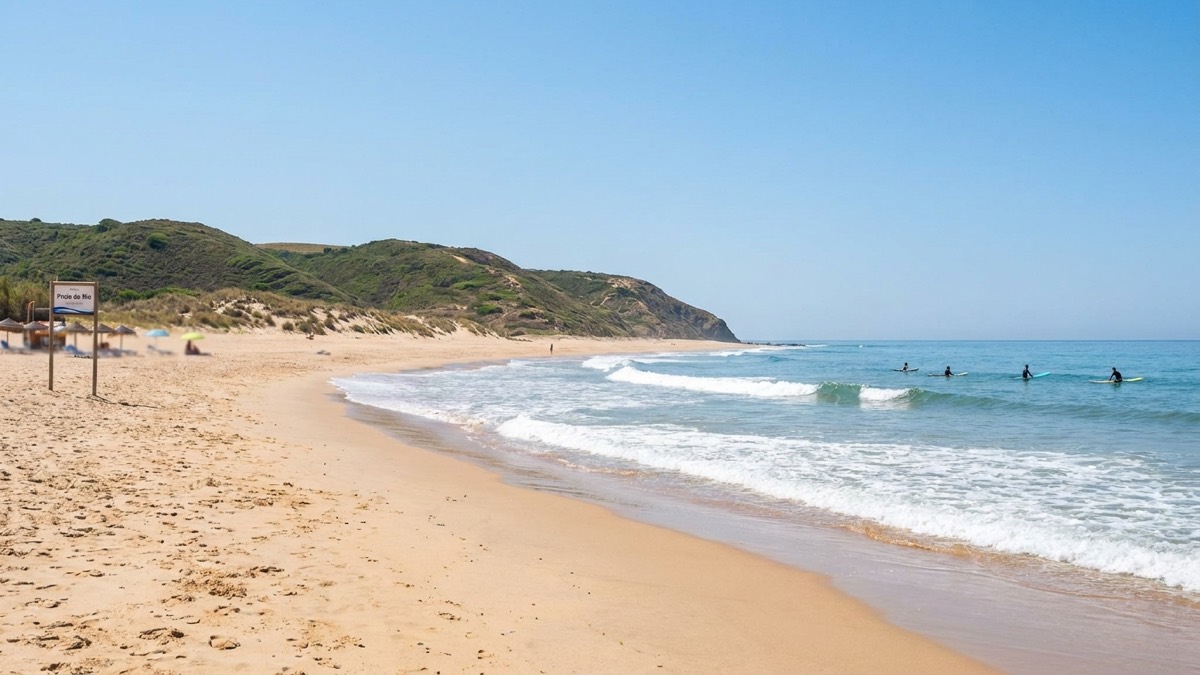
Where to stay: a base in the middle of all the spots
Here is the geography that makes our corner of the coast such a good surf base: Praia de Odeceixe is 5 km from our door, and Amoreira, Monte Clérigo and Arrifana all sit within 22 to 23 km, about twenty minutes' drive. Carrapateira is an easy day trip south, and the quieter Alentejo beaches such as Carvalhal, 16 km north, wait in the other direction. From our three houses among the olive groves, Casa T3 for six, the Loft for four and Casa T1 for two, you can read the morning forecast over coffee and be waxing up at whichever spot is working within half an hour.
The location suits mixed groups especially well. While the surfers chase the tide, everyone else has the Trilho dos Pescadores 2 km away, free bikes to roll down to Odeceixe village, and, from phase 2, a shared pool for the afternoons. Non-surf days practically plan themselves: our guides to the best beaches near Odeceixe and our 7-day Costa Vicentina itinerary, which includes a dedicated surf day, are good places to start.
Getting here with boards is simpler than people fear. Our private Tesla transfer runs door to door from Faro (150 EUR, about 1h30) or Lisbon (250 EUR, about 3h) with real-time flight tracking, and yes, boards can come along: just tell us your board bag size when you book and we will make sure everything fits. No rental car queue, no roof-rack improvisation, no stress. You land, we drive, you surf the next morning.